Warm air heating suits warehouses and factories because it heats large, high spaces quickly and efficiently without the cost of running a full wet system. This guide explains how warm air systems work, why they are popular for industrial premises, and what to think about when specifying one. As Powrmatic approved installers, Industrial Heating Solutions designs, installs and services warm air heating across the Thames Valley.
Heating a warehouse or factory is a very different challenge to heating an office or a home. The spaces are large, often tall, and frequently have doors that open and close all day. The heat has to reach a big volume of air quickly and keep running costs sensible. For most industrial premises in the Thames Valley, warm air heating is the answer, and it has been the workhorse of commercial heating for decades. This guide explains how it works, why it suits large spaces, and what to think about before you specify a system.
How Warm Air Heating Works
A warm air heater does exactly what the name suggests. It draws in air, passes it over a heat exchanger warmed by a gas burner, and blows the heated air out into the space through a fan. There is no network of pipes, radiators or hot water to maintain, which is part of what makes the approach so practical for industrial buildings.
- The burner: Gas is burned cleanly inside a sealed combustion chamber. The flue carries the products of combustion safely outside, so the air being heated never mixes with the exhaust.
- The heat exchanger: The burner heats a metal heat exchanger. Air passes across this surface and picks up the heat, much as a car heater works.
- The fan: A powerful fan pushes the warmed air out into the building, often through directional louvres so you can aim the heat where it is needed.
- The controls: A thermostat and timer switch the heater on and off to hold the temperature you set, so the unit only fires when it needs to.
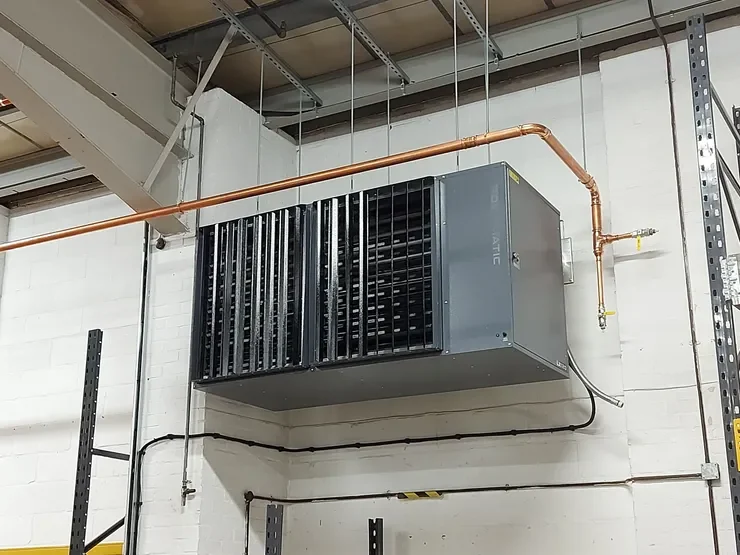
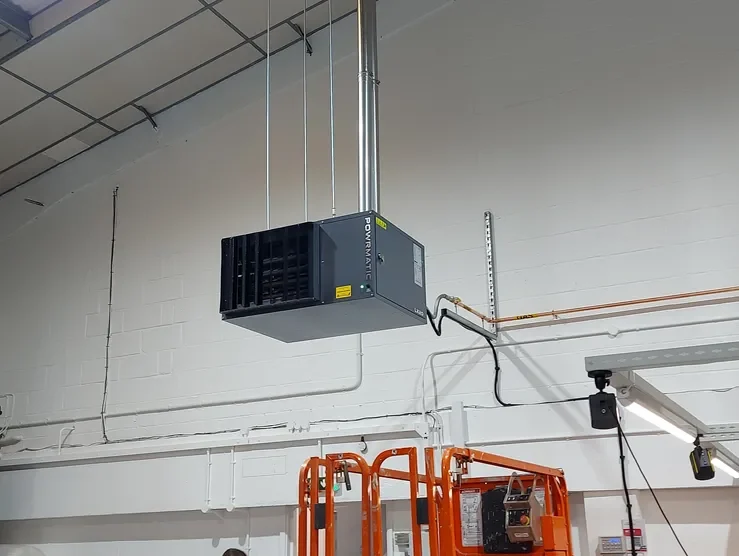
Units can be mounted at high level to free up floor space, suspended from the structure, or fitted as cabinet heaters at ground level. The right approach depends on the building, which is why a proper survey always comes first.
Why It Suits Warehouses and Factories
Warm air heating has stayed popular in industrial settings for some very practical reasons.
- Fast warm-up: Because the system heats the air directly rather than warming water and then radiators, a cold building reaches a comfortable temperature quickly. That matters first thing on a winter morning when staff are arriving.
- Built for big volumes: Warm air units are sized in kilowatts of output to match the volume of the space. A large warehouse can be covered by a handful of well placed heaters working together.
- No water, no radiators: There is no wet system to leak, freeze or corrode, and no radiators taking up valuable wall and floor space in a working environment.
- Resilient to open doors: Loading bays and roller shutters let a lot of heat escape. Warm air systems recover quickly and can be zoned so you are not heating areas that do not need it.
- Simple to maintain: With fewer components than a full wet system, servicing is straightforward, and a single engineer can look after multiple units on a site in one planned visit.
Planning Heating for a Warehouse or Factory?
Call Industrial Heating Solutions on 0118 996 8118. As Powrmatic approved installers we design, install and service warm air heating across Reading and the Thames Valley, starting with a free site survey.
Call for a Free SurveyTypes of Warm Air System
Not every industrial building has the same needs, so warm air heating comes in a few different forms. The right choice comes down to the size and layout of the space, the gas supply available, and how the building is used.
- Suspended unit heaters: Compact heaters mounted at high level and angled to push warm air down into the space. They are the classic choice for warehouses and free up all of the floor.
- Cabinet heaters: Larger floor-standing units that move a high volume of air, often used in bigger factories or where ductwork distributes heat around the building.
- Multiple zoned heaters: Rather than one large unit, several smaller heaters can be spread across a site and controlled in zones, so a packing area can be warm while an unused store is left cooler.
- Radiant alternatives: In some spaces, radiant heating that warms people and surfaces rather than the air is a better fit. We will tell you honestly if that suits your building better than warm air.
As Powrmatic approved installers, we work with their warm air range day in, day out, so we can specify equipment we know inside out and keep the manufacturer warranty in place.
What to Consider When Specifying
Getting the specification right is the single biggest factor in whether a warehouse heating system performs well and runs economically. An undersized system will struggle on the coldest days; an oversized one wastes money. Here is what a good survey looks at.
- Building size and height: The volume of air to be heated drives the output required. Tall buildings also need a plan for the warm air that naturally rises to the roof.
- Insulation and air leakage: A well insulated unit with sealed doors needs far less heat than a draughty older building. We factor the fabric of the building into the calculation.
- How the space is used: A picking warehouse with staff moving around all day has different needs to a store that is only entered occasionally. Zoning the system around how you actually work saves money.
- Door and bay activity: Frequent loading through open shutters means a system that can recover heat quickly, and sometimes air curtains over the doors to hold the warm air in.
- Gas supply and flueing: The available gas supply and a safe route for the flue both affect what can be installed and where.
- Controls: Good timers and thermostats mean the heating only runs when the building is occupied, which is one of the easiest ways to cut running costs.
Running Costs and Efficiency
For most businesses, the running cost matters as much as the install cost. A modern, well specified warm air system is far more economical than an old or undersized one, and there are several ways to keep bills under control.
- Right-sized output: A system matched to the building reaches temperature and then cycles efficiently, rather than running flat out and never quite getting there.
- Zoning and controls: Heating occupied areas to working hours, and leaving unused space cooler, makes a real difference over a winter.
- Regular servicing: A heater that is clean and correctly set burns gas efficiently. A neglected one wastes fuel, so an annual service usually pays for itself.
- Destratification: In tall buildings, warm air collects at the roof. Simple fans that push it back down can noticeably reduce the heat you need to generate.
Because we install, service and maintain the systems we fit, the same team that designs your heating is on hand to keep it running efficiently for years. If you are weighing up heating for a commercial or industrial building in the Thames Valley, a free survey is the best place to start.
Frequently Asked Questions
Warm air heating scales well from a single small unit up to estates with dozens of heaters across a large site. The key is matching the output to the volume of the building, which we work out during the survey. A bigger building simply needs more or larger units, often working in zones.
Because the system heats the air directly rather than warming water first, a correctly sized warm air system brings a cold space up to a working temperature much faster than a wet radiator system. Paired with a timer, the heating can be set to come on shortly before staff arrive so the building is comfortable from the start of the day.
A warehouse heating installation typically ranges from £5,000 to £11,000, depending on the size of the building and the number of appliances needed. Every job is different, so we survey the site first and provide a clear, fixed quote that sets out exactly what is included before any work begins.
Yes. Gas appliances should be serviced every year. An annual service keeps your warm air heaters running safely and efficiently, protects the manufacturer warranty, and reduces the risk of a breakdown during the heating season. As Powrmatic approved warranty engineers we can service these units to the manufacturer standard and keep their warranty valid.