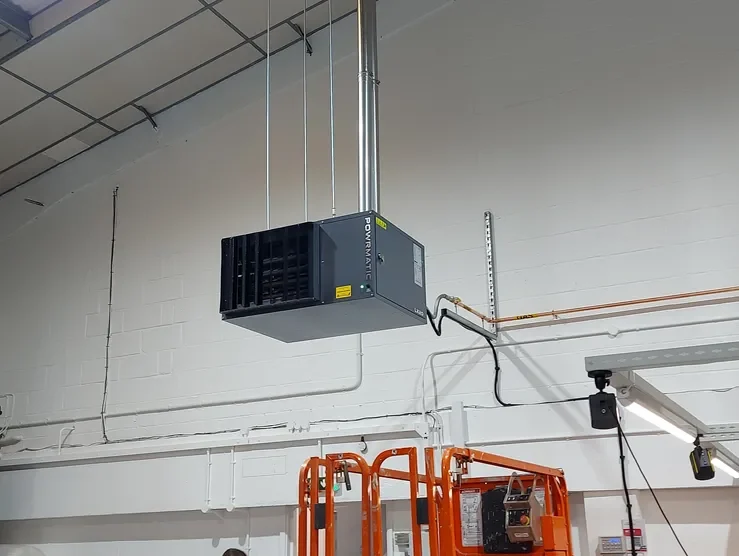
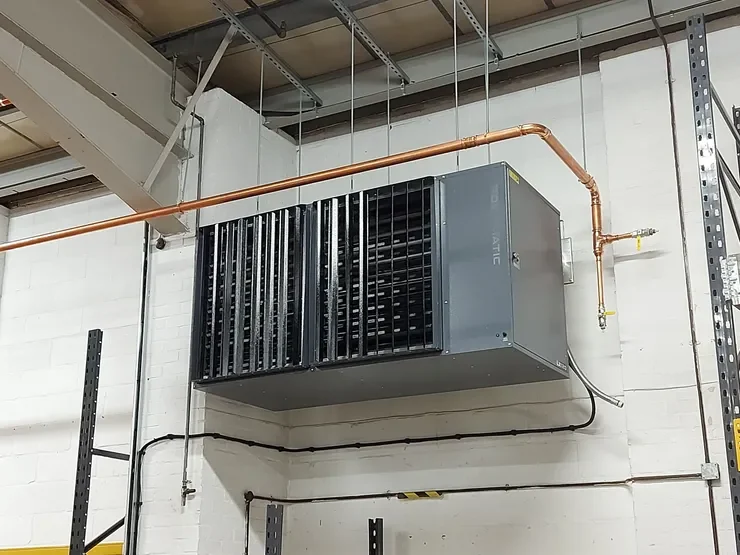
Commercial gas heating, including warm air heaters and boilers, should be serviced once a year. An annual service keeps equipment safe and efficient, protects the manufacturer warranty and reduces the risk of a winter breakdown. This article explains what a commercial heating service includes and how a service contract keeps it organised. Industrial Heating Solutions services commercial heating across Reading and the Thames Valley.
Commercial heating works hardest through the colder months, and on a busy site a breakdown is more than an inconvenience. It can mean cold staff, halted work and an unexpected bill at the worst possible time. Regular servicing is the simplest way to keep that from happening. In this guide we explain how often commercial heating should be serviced, what a service actually involves, and how a service contract takes the hassle out of staying on top of it.
How Often Should It Be Serviced?
The short answer is once a year. Gas appliances, including commercial warm air heaters and gas boilers, should be serviced every twelve months. This applies whether you run a single boiler in a small unit or an estate of warm air heaters across a large warehouse.
- Annual is the standard: Manufacturers specify annual servicing, and it is the interval most warranties are built around. Skipping it can put your cover at risk.
- Before the heating season: The ideal time to service is late summer or early autumn, so any issues are sorted out before the cold weather arrives and the system is relied on.
- Heavier use can mean more: Equipment that runs hard, or sits in a dusty industrial environment, sometimes benefits from more frequent checks. We will advise a sensible interval for your specific setup.
- One visit for the whole site: If you have warm air heaters and a boiler, they can usually be serviced together in a single planned visit, which keeps disruption and cost down.
Why Annual Servicing Matters
An annual service is not just a box-ticking exercise. It protects your people, your equipment and your budget.
- Safety: Gas appliances burn fuel to produce heat. A worn seal, a faulty component or poor combustion can lead to a carbon monoxide risk. A service checks the safety critical parts so problems are caught early.
- Efficiency: A heater that is clean and correctly set burns gas efficiently. A neglected one quietly wastes fuel, so servicing usually pays for itself in lower running costs over a winter.
- Reliability: Most breakdowns happen in the depths of winter. Servicing catches small issues, like a tired part or a drifting setting, before they become a mid-season failure.
- Warranty protection: Manufacturer warranties typically require annual servicing by a qualified engineer. Miss it and a future repair or replacement may not be covered.
- A clear record: Each service comes with documentation for your compliance and warranty files, which contracts and insurers often want to see.
Due a Commercial Heating Service?
Call Industrial Heating Solutions on 0118 996 8118. Our Gas Safe registered engineers service warm air heaters and commercial boilers across Reading and the Thames Valley, and we can set your site up on an annual contract.
Call to Arrange a ServiceWhat a Service Involves
A commercial heating service is a thorough inspection, clean and test carried out by a Gas Safe registered engineer. The exact steps vary between a warm air heater and a boiler, but the principles are the same.
- Visual inspection: The engineer checks the appliance, its connections and the surrounding area for damage, leaks, corrosion or wear.
- Burner and combustion check: The burner is cleaned and tested to confirm it is burning gas cleanly, with combustion and emissions checked so there is no carbon monoxide being produced.
- Heat exchanger and fan: On a warm air heater, the heat exchanger and fan are inspected and cleaned so heat is transferred and distributed efficiently.
- Controls and safety devices: Thermostats, timers and safety shut-offs are tested to confirm they operate correctly and the appliance shuts down safely when it should.
- Flue and ventilation: The flue is checked to confirm the products of combustion are carried safely outside and that ventilation meets the requirements for the appliance.
- Documentation: You receive a clear record of the work carried out for your compliance and warranty files.
Signs You Should Not Wait
If you notice any of the following between services, do not wait for the annual date. Switch the appliance off if it is safe to do so and call a Gas Safe registered engineer.
- A yellow or orange flame: A healthy gas flame burns blue. A yellow or orange flame can point to incomplete combustion and a possible carbon monoxide risk.
- Unusual noises: Banging, whistling or rumbling from a heater or boiler suggests something is not right inside the appliance.
- Weak or uneven heat: Areas of the building that used to be warm now feeling cold can mean a heater is losing performance or has a fault.
- Frequent cut-outs: An appliance that keeps shutting down or will not stay running needs attention before it fails completely.
- A smell of gas: Never ignore a gas smell. Turn off the supply, ventilate the area, and call the national gas emergency line on 0800 111 999.
How a Service Contract Helps
Most of our customers move onto an annual service contract, and for good reason. It takes the job of remembering off your plate and keeps your heating checked at the same time each year, ahead of winter.
- Never forgotten: We schedule the visit and remind you when it is due, so a service never slips through the cracks on a busy site.
- One trusted team: The same engineers get to know your equipment, which makes servicing quicker and any future repair easier to diagnose.
- Whole site in one visit: Warm air heaters and boilers are checked together, even on sites with twenty or thirty appliances, planned around your operation.
- Protected uptime and warranties: Regular servicing keeps cover valid and reduces the chance of a costly breakdown when you can least afford it.
Because we both install and maintain commercial heating, the team that services your system also knows how to keep it running for the long term. If your heating is due a service, or you would like it set up on a contract, we cover Reading, Berkshire and the wider Thames Valley.
Frequently Asked Questions
Commercial gas heating, including warm air heaters and gas boilers, should be serviced once a year. Annual servicing keeps the equipment safe and efficient, helps protect the manufacturer warranty, and reduces the risk of a breakdown during the heating season. The best time is usually late summer or early autumn, before the cold weather arrives.
Servicing a commercial boiler typically costs between £100 and £200 per visit, while warm air and warehouse heater servicing is generally £200 to £350, depending on the type and number of appliances on site. For larger or multi-appliance sites we provide a clear quote before any work begins.
Yes. Warm air heaters and commercial boilers can be serviced together on a single planned visit, even on sites with twenty or thirty appliances. It saves time, reduces downtime, and means one trusted team knows your whole system. Many customers fold everything into one annual service contract.
Skipping servicing increases the risk of a winter breakdown, raises running costs as the appliance loses efficiency, and can invalidate the manufacturer warranty so a future repair is not covered. There are also safety implications, as unchecked gas appliances can develop faults that go unnoticed. Annual servicing is by far the cheaper and safer option.